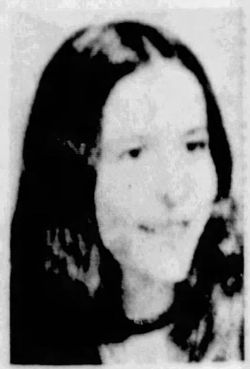
Do you know who murdered 20 year old Suzanne Powell in 1979? Suzanne Michelle Powell was a 20-year-old White woman whose promising future was tragically cut short in Gainesville, Florida, on December 30, 1979. Born on Tuesday, September 8, 1959, to Donald and Louise Powell, Suzanne grew up in a family of four children alongside her two brothers, Rob and Steve, and her sister, Wendy. Her family remembered her as someone with a vibrant personality, describing her as “very bubbly” and “definitely an extroverted person.”
She was outgoing, energetic, and beginning an exciting new chapter in her life when an ordinary responsibility at her part-time job placed her in the path of a killer.
Originally from Hollywood, Florida, Suzanne had moved to Gainesville to attend her freshman year at the University of Florida, where she was studying mass communications and marketing. Like many college students living away from home for the first time, she was balancing her education with the financial responsibilities of independent living. According to newspaper reporting, Suzanne resided at 4000 SW 47th Street in Gainesville with her roommate, Bruce Lampton. Lampton told The Gainesville Sun that Suzanne needed money to cover utility bills and personal spending expenses. Her class schedule limited her employment opportunities, making nighttime work the most practical option. To support herself while pursuing her education, she took a position as a clerk at the Majik Market convenience store at 4105 NW 13th Street.
Suzanne's responsibilities at the convenience store included handling the business's nightly receipts and transporting the money to a nearby bank for deposit. The task had become part of her regular work routine, requiring her to leave the store and drive a short distance to Atlantic Bank at 3838 NW 13th Street. On the night of Saturday, December 29, 1979, Suzanne was carrying out those familiar duties. She had no apparent reason to believe that the brief trip to the bank would be any different from previous nights. What should have been a routine deposit instead became the final moments of her life.
As Suzanne approached the bank's night deposit box shortly before midnight, an unknown attacker opened fire with a shotgun. The blast shattered the windshield of her vehicle and fatally wounded her. The shooting occurred as she was attempting to deposit the convenience store's receipts. The violence appeared to have been connected to a robbery, with later accounts reporting that approximately $275 in business funds was taken. The attacker escaped before authorities could identify or apprehend anyone responsible, leaving behind a devastating scene outside the bank.
At approximately 12:05 a.m. on Sunday, December 30, 1979, two women arriving at Atlantic Bank discovered Suzanne and the aftermath of the shooting. Gainesville Police Department records state that she was found shot inside her vehicle. A separate historical account described her body lying on the ground when officers arrived, with financial documents from the convenience store scattered nearby. Although those accounts differ regarding her exact position when authorities reached the scene, both describe a fatal shooting that occurred while she was making the store's night deposit. Investigators quickly recognized that Suzanne had been the victim of a homicide and began trying to reconstruct the events that had unfolded outside the bank.
The circumstances of the killing raised troubling questions about whether Suzanne had been specifically targeted because of her employment responsibilities. Her regular trips to deposit the store's earnings may have made her vulnerable to someone familiar with the convenience store's operations. Investigators had to consider whether the attacker had watched her movements, followed her from the store, or simply encountered her at the bank. However, publicly available information does not establish that anyone had been deliberately monitoring her routine or that the perpetrator knew her personally. The identity of the gunman and the precise sequence of events leading to the shooting remained uncertain.
As the homicide investigation progressed, authorities eventually developed two possible suspects, identified as Readus Sheperd and Thomas E. Willard. Both individuals were described in a published account of the case as escaped prisoners. Their possible involvement reportedly came to investigators' attention through information supplied by an anonymous jailhouse informant. Although the information was significant enough to bring the men under suspicion, detectives encountered serious difficulties establishing a direct connection between either individual and Suzanne's murder. Investigators reportedly possessed no physical evidence conclusively placing Sheperd or Willard at Atlantic Bank when the shooting occurred.
The lack of corroborating evidence became a major obstacle in the investigation. Statements from an unidentified informant, without supporting forensic findings or reliable eyewitness testimony, were insufficient to establish that either man had committed the crime. Neither Sheperd nor Willard was convicted of Suzanne's murder, and the available reporting does not establish that either was formally charged in connection with her death. As investigators continued pursuing possible leads, the case remained unresolved, leaving Suzanne's family without a definitive answer about who had taken her life.
Decades later, another potentially significant development renewed attention on Sheperd. According to an account published in October 2010, a close family member of Sheperd contacted investigators and reported that he had once admitted to killing a woman in Gainesville. The alleged admission raised further questions about his possible involvement in Suzanne's death, particularly because his name had already surfaced during the original investigation. However, the reported statement did not conclusively establish that Suzanne was the person referenced in the alleged confession. Without independent evidence connecting Sheperd to the shooting, investigators could not determine whether the information represented a genuine breakthrough or another lead that could not be substantiated.
By the time that information became publicly known, Sheperd had already died. Willard, meanwhile, had reportedly disappeared, and his whereabouts were unknown. These developments further complicated efforts to resolve a homicide that had remained open for decades. The passage of time presented additional difficulties as potential witnesses became harder to locate, memories faded, and investigators continued to confront the absence of definitive physical evidence. Although the names of two possible suspects had emerged, neither man's responsibility for the shooting was ever established through a criminal prosecution.
The Gainesville Police Department continues to identify Suzanne's death as an unsolved homicide under case number 79-49013. Her case remains included among the department's cold case investigations, reflecting the continuing absence of a confirmed perpetrator or criminal conviction. The City of Gainesville has offered rewards of up to $10,000 for information leading to the arrest and conviction of individuals responsible for its listed cold case homicides. Despite the investigative leads developed over the years, no publicly documented arrest, trial, or conviction has resolved Suzanne's killing.
For Suzanne's family, the tragedy extended far beyond the violence that occurred outside Atlantic Bank. Donald and Louise Powell lost a daughter, while Rob, Steve, and Wendy lost their sister. The young woman they remembered for her bubbly, outgoing personality had left home to pursue an education and build an independent future. She had been studying subjects that interested her, working to pay her expenses, and adjusting to college life in Gainesville. Her decision to take a nighttime job was part of an effort to support herself, not an indication that she knowingly placed herself in danger.
Suzanne's murder remains a painful reminder of how suddenly an ordinary moment can change the lives of an entire family. She was carrying out a responsibility for her employer when she encountered a level of violence that no one could reasonably have anticipated. More than four decades later, unanswered questions still surround the shooting, the reported robbery, and the individuals once investigated as possible suspects. While the official case remains open, Suzanne Michelle Powell is remembered not simply as the victim of an unsolved homicide, but as a beloved daughter, sister, college student, and outgoing young woman whose life was filled with possibilities that she never had the opportunity to fulfill.