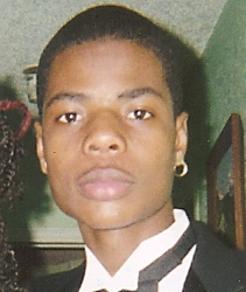
On November 15, 2008, Lemoriss Jr Walton, a 28-year-old man, came to the London Square Apartments in northwest Oklahoma City, a spread of beige buildings and open courtyards off Melrose Lane where families and visitors moved in and out throughout the day. He did not live in the city; his home was in eastern Oklahoma, and he had made the trip in to visit at the complex, stepping for a short time into the rhythms of a neighborhood that was not his own.
Behind him, in another part of the state, were two young children who knew him as their father, not as the man whose name would later appear in homicide databases and brief news links.
Sometime that day, amid the ordinary sounds of apartment life—cars pulling in and out, doors opening and closing, voices carrying across the grass—the quiet of the complex was broken by gunfire. Lemoriss was shot on the grounds of London Square; witnesses later described seeing him fall and never get back up. The attack was swift, the kind of sudden violence that does not give its target time to flee or fight back. By the time the scene began to fill with the flashing lights and caution tape that so often follow such moments, Walton’s life had already ended there at the apartment complex where he had only meant to spend a short visit.
In the days that followed, Oklahoma City police opened a homicide investigation, treating the shooting as a death by force rather than some ambiguous tragedy. Public records show that local newspaper coverage reported a man being arrested in connection with the shooting death, a development serious enough that it has remained linked to Walton’s case in modern online case summaries. Yet those same public summaries do not preserve the suspect’s name, the precise charges, or the ultimate outcome of that arrest, and they offer no indication that the story ended with a clear resolution in court. As time passed and the shock of the killing faded from the front page, authorities and community partners turned to the public, publicizing a reward for information about the 2008 shooting in the hope that someone who knew more would finally step forward.
Years later, the traces of what happened are scattered across the internet in ways that hint at both the violence of that day and the emptiness it left behind. Online homicide databases list his full name, the date he was found and killed—November 15, 2008—and the fact that his body was discovered in Oklahoma City, not far from where he had been visiting at London Square. The entry is stark but telling: the field that marks whether the case has been solved is still set to “No,” even after all these years, signaling that, whatever arrests may have been made, Lemoriss Jr Walton’s killing is still officially considered an unsolved homicide.
Around that bare record, a quieter story has taken shape in forum posts and comments attached to his case. People write about the impact his death has had on his children, wondering aloud how they have managed to grow up in the long shadow of a father’s murder with no public answer for who pulled the trigger and why. Others simply express sympathy for a family in eastern Oklahoma that lost a son and a father at twenty-eight, then had to watch his name slowly drift into the category of “unsolved,” preserved mostly in short digital summaries and in their own memories. In that sense, the story of Lemoriss Jr Walton is not just the story of a man shot down in an Oklahoma City apartment complex; it is also the story of a family and community still waiting for someone, somewhere, to finally fill in the missing pieces of what happened on that November day.